
Sport Highlight – Volar Plate Injuries
Volar plate injuries occur when your finger bends too far backwards (also known as hyperextension), and is a common sporting injury. It typically affects the middle joint of your finger (proximal interphalangeal joint), but can affect all finger joints. It commonly presents with pain and swelling around your knuckle, and reduced ability to bend or move the finger.
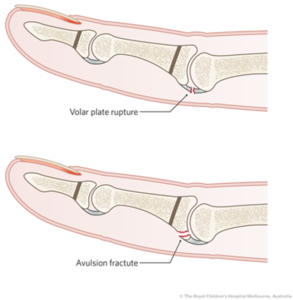
The volar plate is a strong ligament on the palm side of the finger, which prevents hyperextension and dislocation of your joints. When a ball or impact from a fall forces your finger backwards, or when your joint dislocates, this can partially tear the volar plate, or fully pull the ligament away from its attachment (i.e. the middle phalanx).
TYPES OF VOLAR PLATE INJURIES
There are 2 types of volar injuries:
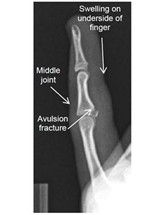
Avulsion Fracture
When the volar plate is torn away from its attachment, it can sometimes pull a little chip of bone off with it, called an avulsion fracture. This typically takes around 6 weeks to heal.
Ligamentous
A ligamentous volar plate injury is when there is no associated fracture, and the ligament itself is either partially torn or completely ruptured. A partial tear can cause mild instability and a full rupture will result in significant instability and a high risk of recurrent dislocations. Healing timeframes vary depending on the extent of the injury, but typically take 8-12 weeks to fully heal.
TREATMENT
Conservative treatment is the same for both types of volar plate injuries. It involves a period of splinting, using a finger based dorsal blocking splint, to be worn full time except for hygiene. This prevents your finger from hyperextending a
gain and supports healing of the affected structures. It is also important to complete flexion exercises to regain movement in your finger as soon as possible. Flexing your finger into a fist is completely safe and encouraged following a volar plate injury, and supports a faster recovery. Full volar plate ruptures require surgical repair to prevent long term instability and biomechanical changes (eg. Swan neck deformity).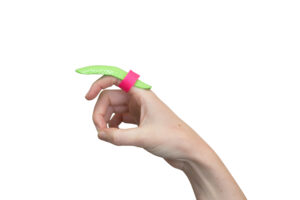
If you think you’ve sustained a volar plate injury or are worried about your finger, book in with one of our hand therapists for a comprehensive assessment.
Written by Katie Yates