
Sport highlight – Scaphoid fractures
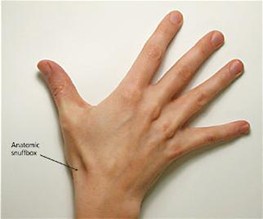
Scaphoid fractures are the most common carpal fracture in a wrist. The scaphoid is a small, peanut shaped bone that makes up one of the eight carpal bones in the wrist. It is located on the thumb side of the wrist, and can be easily found when making a ‘thumb’s up’ position – this position activates the extensor tendons of the thumb, which creates a small depression in the wrist called the anatomical snuffbox. Your scaphoid is located directly in the anatomical snuffbox. Scaphoid fractures are common sports injuries, and typically occur during a fall onto an outstretched hand, or during a punching mechanism (eg punching a football). Scaphoid fractures are more common in males than women.
Types of scaphoid fracture:
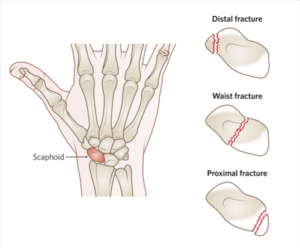
Scaphoid fractures can be separated into 3 main locations:
- Distal scaphoid fractures (most common in young children)
- Scaphoid waist fractures
- Proximal pole scaphoid fractures
The most common type of scaphoid fracture is a waist fracture.
Symptoms of scaphoid fracture:
As the scaphoid is a small bone in the wrist, fractures here may not cause a significant amount of pain. People with a scaphoid fracture may not realise they have broken a bone – they commonly think they have just sprained their wrist. The main symptoms of a scaphoid fracture are pain and swelling directly over the anatomical snuffbox area and an inability to weight bear through the hand. A person may also have reduced power with their grasp. Generally you are still able to move your wrist with a scaphoid fracture.
Diagnosis:
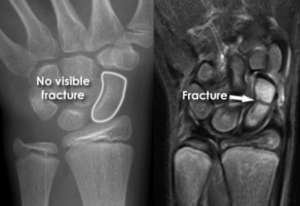
Large scaphoid fractures can be diagnosed with a wrist xray with dedicated scaphoid views. However, smaller, undisplaced scaphoid fractures may not show on an xray, especially if the xray is taken soon after injury. In this instance, an MRI is required to diagnose a scaphoid fracture.
Treatment:
It is important that scaphoid fractures are diagnosed and treated quickly. The scaphoid is a bone that has a poor blood supply – this means that if it is not diagnosed and treated appropriately in a timely manner, the bone may not heal. Distal scaphoid and non-displaced scaphoid waist fractures are typically treated in a cast or thermoplastic splint which immobilises the wrist for 8 weeks. Follow up xrays are recommended to confirm healing.
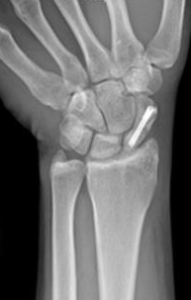
Large, displaced waist fractures or proximal pole fractures require surgery by an orthopaedic surgeon, as do fractures that have a delayed diagnosis. During surgery, a screw or plate is used to fixate the scaphoid bone together to ensure proper healing. This is followed by 8 weeks of casting, and then a period of post operative rehabilitation.
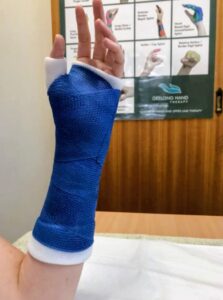
Hand therapy rehabilitation for a scaphoid fracture includes mobilisation to improve wrist range of motion and strengthening, including a strong focus on regaining neuromuscular control of the wrist.
If you are concerned that you have fractured your scaphoid or need help with rehabilitation after a confirmed fracture, book in with one of our therapists today.
Written by Emily McMaster